
Compounded · prescription only
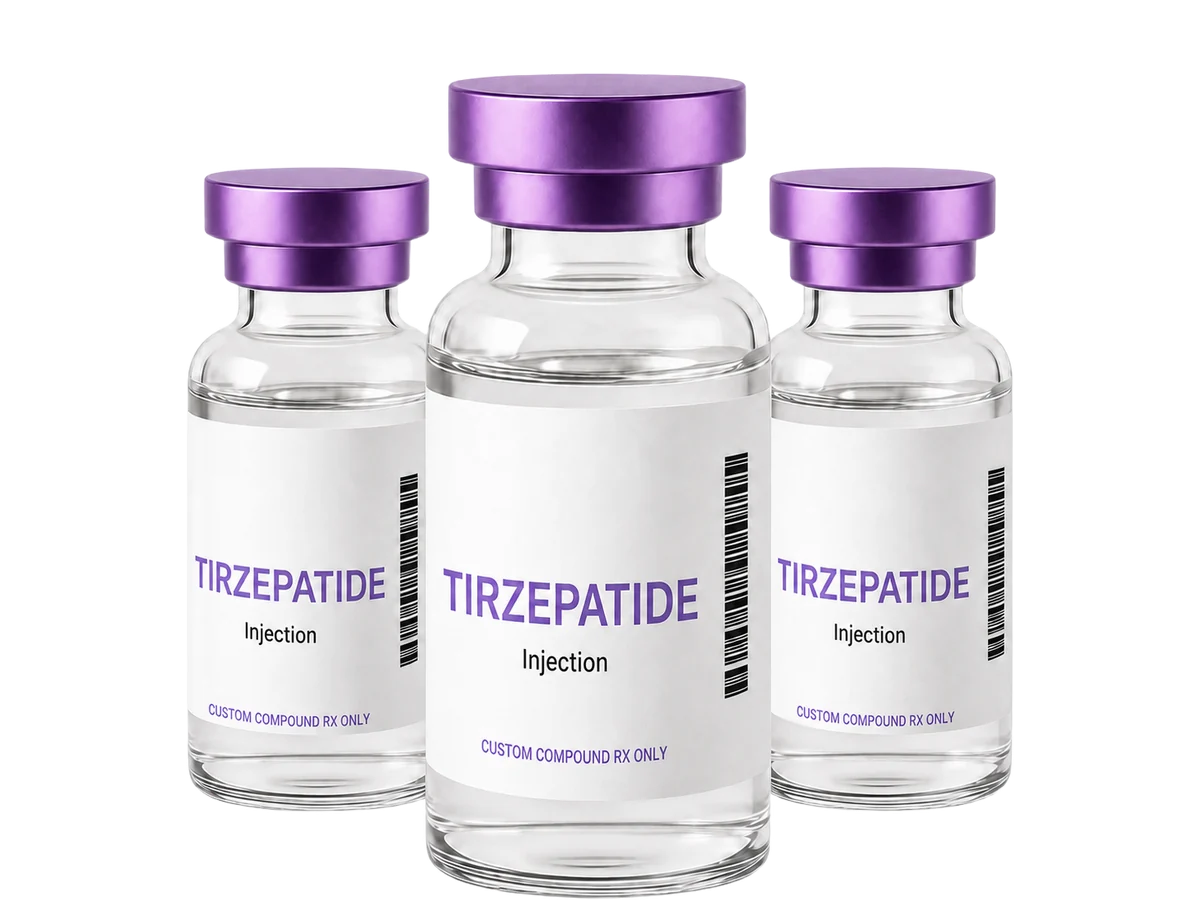
Tirzepatide + B12
A once-weekly injection that works on two of your body's appetite signals at once. Prescribed and adjusted by a U.S.-licensed clinician.
- Type
- GLP-1 / GIP
- How it's taken
- Injection under the skin
- How often
- Once a week
- Dose range
- 2.5–15 mg
Pick your plan.
Longer plans cost less per month. Same price at every dose.
1. Choose a medication
2. Choose how you take it
Tirzepatide + B12. A once-weekly injection that acts on two appetite hormones, GLP-1 and GIP, compounded with vitamin B12. Your clinician sets and adjusts the dose.
Compounded for you by Perfect RX, a state-licensed pharmacy, on a clinician's prescription. Not FDA-approved and not the same as any brand-name product.
3. Choose how often you pay
- Online review by a U.S.-licensed clinician
- Medication and supplies, shipped monthly
- Dose adjustments as you go, same price at every dose
- Unlimited messaging with your care team
- Free, discreet shipping
- Pause or cancel anytime
About 5 minutes. A clinician reviews everything before anything ships.
How it works in your body
Turning up the “I’m full” signal.
After you eat, your gut releases two hormones, GLP-1 and GIP. Together they tell your brain you've had enough, slow down how quickly your stomach empties and help keep blood sugar steady.
Tirzepatide mimics both hormones and lasts about a week, so one injection keeps those fullness signals turned up between doses. That's why many people notice they feel satisfied sooner and think about food less.


What to expect
Week by week, not overnight.
- Week 1
Your clinician starts you at a low dose (usually 2.5 mg) so your body can adjust. Appetite often starts to quiet within days.
- Weeks 2–8
Mild nausea or constipation is common, especially after dose changes. Your care team helps you manage it and decides when to step up.
- Months 3–6
Doses are adjusted at check-ins based on how you feel and how you're progressing. Weight loss builds steadily over months, not days.
- Month 6 and on
You and your clinician decide together how to maintain: stay on your current dose, adjust it, or plan a gradual taper.
Everyone responds differently. Your clinician sets the pace with you.
The research
What the trials found.
average weight loss at 72 weeks on brand-name tirzepatide 15 mg, vs 3.1% on placebo, in 2,539 adults.
average weight loss with brand-name tirzepatide vs brand-name semaglutide in a 72-week head-to-head trial.
Results are from trials of FDA-approved brand-name medicines, used with diet and activity changes. Compounded tirzepatide was not studied in these trials. Vitamin B12 has not been tested as a weight-loss ingredient. Individual results vary.
Tirzepatide questions
Before you start.
It's a small injection under the skin of your stomach, thigh or upper arm, once a week on the same day. Your kit includes supplies and step-by-step instructions, and your care team can walk you through your first dose.
Most people start at 2.5 mg once a week. Your clinician may increase the dose in steps, typically every four weeks, based on how you respond and how you feel.
No. Your plan price stays the same at every dose.
No. Compounded tirzepatide is prepared by a state-licensed pharmacy for you individually, on a prescription. It is not FDA-approved and is not a generic version of any brand-name product.
Important Safety Information
Warning: possible thyroid tumors, including cancer. In studies in rodents, tirzepatide and semaglutide caused thyroid C-cell tumors. It is not known whether they cause these tumors in people. Do not use GLP-1 medication if you or a family member has ever had medullary thyroid carcinoma (MTC) or if you have Multiple Endocrine Neoplasia syndrome type 2 (MEN 2). Tell your clinician about a lump or swelling in your neck, trouble swallowing, hoarseness or shortness of breath.
Do not use if you are pregnant, planning to become pregnant or breastfeeding, or if you have had a serious allergic reaction to tirzepatide, semaglutide or any ingredient.
Serious side effects can include pancreatitis, gallbladder problems, low blood sugar, kidney problems, serious allergic reactions, vision changes in people with diabetes, and mood changes. Common side effects include nausea, diarrhea, vomiting and constipation. Compounded medications are not FDA-approved. Read the full Important Safety Information.
Ready when you are.
Answer a few questions online. A licensed clinician reviews them and, if it's right for you, your treatment ships to your door.
See if you qualify